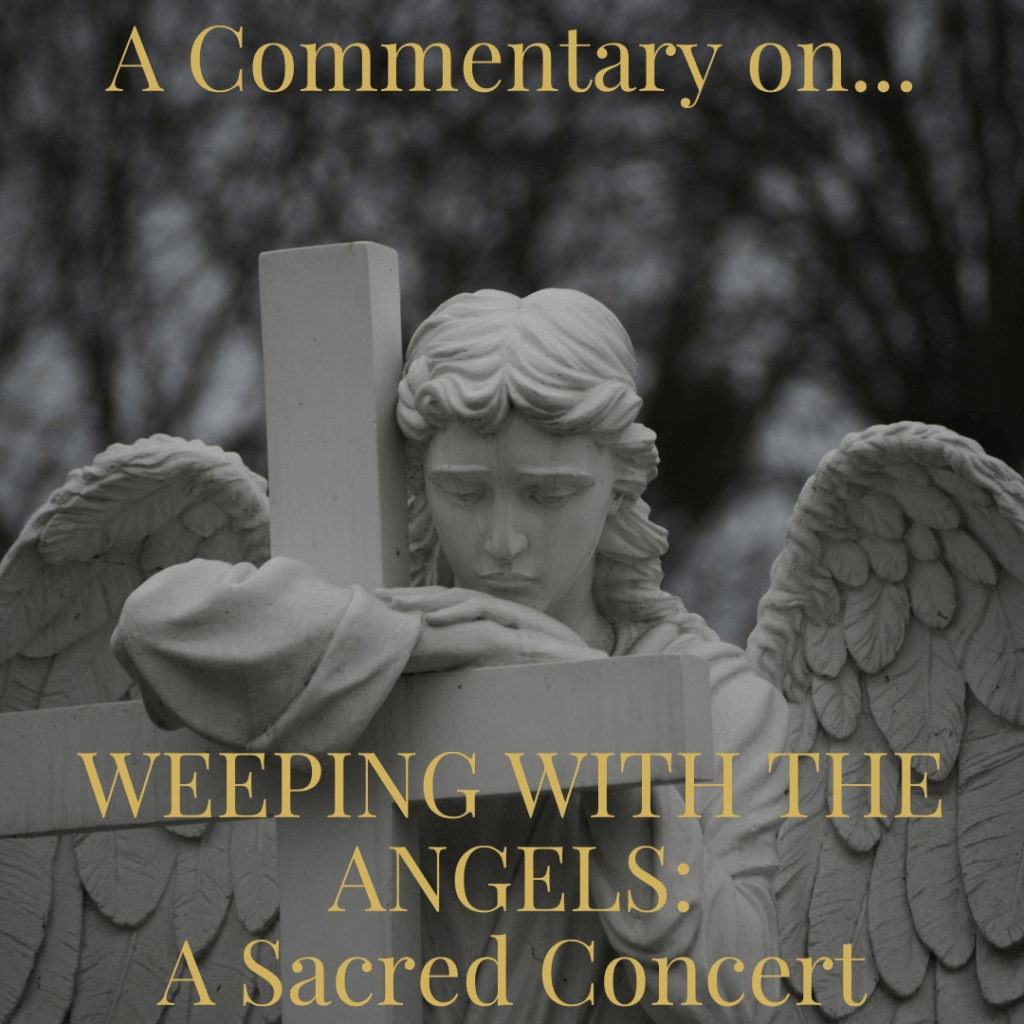
Tenebrae is the solemn celebration of the canonical Hours of Matins and Lauds for each of the last three days of Holy Week, Holy Thursday, Good Friday and Holy Saturday. That Divine Office formed an integral part of a rich tapestry of liturgical services, prayers, and devotional practices—including processions and symbolic commemorations of Christ’s burial—associated with Lent and the Sacred Triduum.
The first part of the Tenebrae service, Matins, consists of three nocturnes, each comprising three psalms with antiphons, a scriptural reading (the Lesson), and a responsory. In the Tenebrae of Holy Thursday, all three nocturnes include readings from the first chapter of the Book of Lamentations of Jeremiah, which portrays the catastrophic destruction of Jerusalem. Each reading concludes with the added non-scriptural plea: Jerusalem, convertere ad Dominum Deum tuum [Jerusalem, turn to the Lord your God].
Although originally linked to the liturgy of the Triduum, the Tenebrae service also conveys symbols and theological themes that are deeply relevant to the beginning of Lent. The lament over Jerusalem’s downfall, while rooted in concrete historical events, functions as a powerful allegory of spiritual devastation caused by separation from God. Physical ruin is accompanied by profound psychological and spiritual suffering—humiliation, sorrow, and inner desolation.
In the prophetic tradition of the Old Testament, the destruction of the city was understood as the anticipated consequence of Israel’s betrayal of the covenant. More broadly, the vivid imagery of ruins becomes a metaphor for the consequences of human sin throughout history. The Book of Lamentations employs this compelling vision of devastation as an artistic and spiritual means of awakening the desire for conversion and renewal.
From a Christian perspective, the disobedience of original sin resulted in a disorientation of the human heart as a direct consequence of the loss of harmony with God. It opened the way for personal sin to disrupt individual lives, families, communities, and nations. Relationships are fractured: with oneself (inner division), with others (injustice and indifference), and with God (loss of trust). True repentance—often resisted through denial—becomes the necessary foundation for a sincere search for truth. This truth is not mere knowledge, but a call to transformation: the rebuilding of a fragmented self and the realignment of life with conscience. Such conversion engages the whole person and is indispensable for the growth of authentic love.
François Couperin’s Leçons de ténèbres, published in 1714 during the final, somber years of Louis XIV’s reign, emerged in a climate marked by political exhaustion, religious introspection, and spiritual reform. As organist of the Chapelle Royale, Couperin composed for audiences that valued both theological depth and artistic refinement. Scored with striking restraint for solo voice and continuo, these settings of the Lamentations of Jeremiah renounce theatrical display in favor of introspection, silence, and moral gravity.
Suspended harmonies, spare melodic lines, and the meditative unfolding of the Hebrew letters draw the listener into a space of interior prayer, where human frailty is laid bare and hope rests entirely on divine mercy. Couperin gives musical voice to a world exposed by its own unfaithfulness, suspended between judgment and hope. The cycle’s austere scoring, restrained expressivity, and charged silences mirror the Lenten disciplines of fasting, watchfulness, and inward prayer. As the Tenebrae liturgy gradually descends into darkness, the music leads the listener into a state of penitence and waiting, where redemption is not yet proclaimed but quietly longed for.
In the Lamentations, suffering is understood as the tragic consequence of humanity’s turning away from God. Sin fractures communion with the Creator, and this rupture spreads into social, political, and personal ruin. At the same time, Christian tradition reads these texts as a prophetic foreshadowing of Christ’s Passion. The devastation caused by sin made Christ’s suffering indispensable in God’s plan of salvation: what sin had disordered, Christ restores through His redeeming sacrifice. In this way, the cry of Lamentations finds its ultimate answer in the Cross.
The suffering of the allegorical city of Jerusalem—personified in the voice of a grieving woman—is echoed in the lament of Mary at the Cross. Her sorrow, confusion, and steadfast love for her dying Son are expressed in Pianto della Madonna, a musical meditation based on an anonymous text and composed by the Italian Baroque master Giovanni Felice Sances, who spent much of his life in service to the Habsburg Imperial Court inVienna.
While Christ bears the physical burden of the Passion, Mary shares in His sacrifice through her spiritual anguish and faithful consent. Pianto della Madonna continues to speak with undiminished power about love, loss, and faith. In listening to this work, we are invited not merely to observe Mary’s sorrow, but to stand beside her—and, even in darkness, to glimpse the promise of redemption.
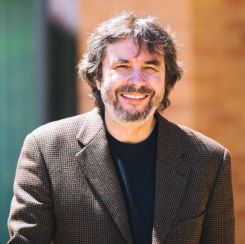
Andrzej Zahorski is Director of Music at St. Anselm Parish in St. Louis, MO. He holds a doctorate of musical arts from Stanford University.